Darknet Markets 2026:
The dark web is part of the deep web but is built on darknets: overlay networks that sit on the internet but which can't be accessed without special tools or software like Tor. Tor is an anonymizing software tool that stands for The Onion Router — you can use the Tor network via Tor Browser.
| Darknet Market | Established | Total Listings | Link |
|---|---|---|---|
| TorZon Market | 2022 | 140+ | Onion Link |
| Nexus Market | 2024 | 600+ | Onion Link |
| Abacus Market | 2022 | 100+ | Onion Link |
| Ares | 2026 | 100+ | Onion Link |
| Cocorico | 2023 | 110+ | Onion Link |
Updated 2026-10-27
How Cryptocurrency and Reviews Make Darnet Drug Trade Reliable
The operational stability of darknet markets relies on two interconnected systems: a secure financial layer and a transparent reputation mechanism. Cryptocurrencies, primarily Bitcoin and Monero, provide the necessary financial architecture. These currencies enable transactions that are pseudonymous by design, separating financial flow from real-world identity. This is not simple anonymity; it is a functional requirement for a marketplace operating outside conventional banking. Payments are recorded on a public ledger, the blockchain, but the parties involved are represented by encrypted wallet addresses. This creates a verifiable yet detached record of exchange, allowing for transaction finality without exposing personal data.
Trust between strangers in this environment is engineered through decentralized feedback systems. After a transaction, buyers leave detailed reviews and ratings on the vendor's profile. This generates a reputational score that is publicly visible and difficult to falsify. The system functions as a continuous audit, where consistent performance is rewarded and poor service is immediately visible. Key metrics displayed include:
- Overall rating percentage (e.g., 4.95/5)
- Number of completed transactions
- Specific feedback on product quality, shipping, and communication
These two elementscryptocurrency and reviewsare integrated through the escrow service. Upon ordering, the buyer's cryptocurrency is held in escrow by the market platform. The vendor ships the product, but the funds are not released until the buyer confirms receipt and satisfaction. This mechanism aligns incentives: vendors are motivated to deliver as described to receive payment, while buyers can trust that their funds are protected until the transaction is complete. The escrow system mitigates the fundamental risk of remote, anonymous trade, transforming a potentially hazardous exchange into a structured, predictable commercial interaction. The resulting ecosystem is self-policing, where financial security and collective oversight foster a reliable environment for commerce.
How Trust and Tech Drive Drug Sales on the Darknet
The economic model of darknet markets is fundamentally built on trust and security, which are achieved through the integration of two core technologies: cryptocurrency and user review systems. These mechanisms work in tandem to create a self-regulating commercial environment where transactions can occur with a high degree of confidence between anonymous parties.
Cryptocurrencies like Bitcoin and Monero provide the necessary financial layer. Their decentralized and pseudonymous nature allows for secure payments that are not directly tied to real-world identities. This solves the primary issue of financial privacy. Payments are typically held in a market-controlled escrow service until the buyer confirms receipt of the goods. This protects the buyer from vendors who might not ship products and protects the vendor from fraudulent chargebacks, a common problem in conventional e-commerce.
The escrow system alone is insufficient without a method to evaluate participant reliability. This is addressed by comprehensive feedback and rating systems. After a transaction, buyers leave detailed reviews and scores on product quality, shipping speed, and stealth of packaging. These reviews are permanently linked to a vendor's profile, creating a transparent reputation history. A vendor with thousands of positive reviews and a high rating becomes a trusted entity within the ecosystem. This system incentivizes honest business practices, as poor service or product quality leads to negative public feedback, which directly impacts future sales.
The combination is synergistic. Cryptocurrency enables the secure transfer of value, while review systems provide the social proof needed to decide where to direct that value. This fosters a competitive marketplace where vendors are motivated to maintain high standards to build and protect their reputation. The resulting environment demonstrates how these markets have institutionalized trust mechanisms, making drug sales their dominant and most resilient economic activity.
How Encryption and Anonymity Make the Darknet Work
The operational foundation of darknet markets rests on a dual-layer architecture of encrypted networks and robust user anonymity. This infrastructure is not merely defensive; it actively enables a secure commercial environment. The primary network layer is Tor (The Onion Router), which obfuscates a user's IP address and location by routing traffic through a distributed network of volunteer relays. Access to a market's .onion address is therefore the first critical step, separating the platform from the open web and creating a barrier to casual surveillance.
Within this anonymized space, individual identity is further protected through cryptographic practices. Users and vendors operate under pseudonyms, with all communications and transaction details secured by end-to-end encryption, typically using PGP (Pretty Good Privacy) keys. This ensures that private messages, shipping addresses, and order specifics are readable only by the intended recipient, mitigating risks even if platform data is intercepted.
This technical framework directly facilitates the core economic activity. By guaranteeing privacy and deniability, it lowers the perceived risk for participants, encouraging market engagement. The resulting environment allows for the establishment of a self-regulating commercial system, where traditional identifiers are replaced by digital reputations and where secure, peer-to-peer exchange becomes the operational norm.
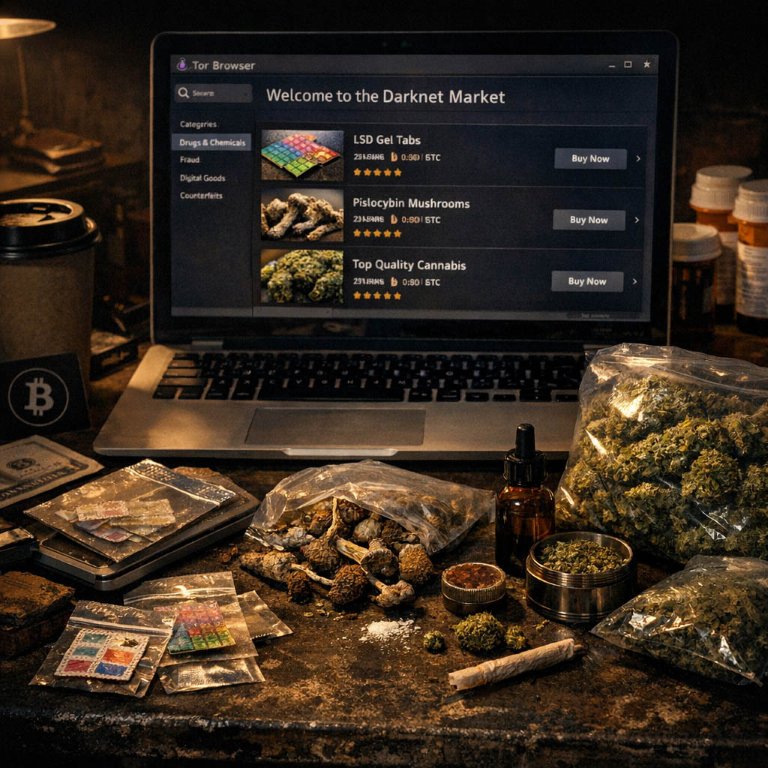
How Cryptocurrency Makes Buying Drugs on the Darknet Safe and Easy
Cryptocurrency is the financial backbone of darknet markets, enabling transactions that are both secure and pseudonymous. The use of currencies like Bitcoin and Monero allows buyers and sellers to exchange value without relying on traditional banking systems, which require personal identification. This creates a fundamental layer of privacy, separating financial activity from real-world identity.
The transaction process is direct. A buyer funds their market wallet, places an order, and the cryptocurrency is held in escrow by the market platform. This escrow system is critical, as it prevents the seller from receiving payment until the buyer confirms receipt of the product. Only then is the funds release automated. This mechanism aligns the seller's incentive with successful delivery, reducing fraud.
Trust is further institutionalized through transparent user review and rating systems. After a transaction, buyers leave detailed feedback on product quality and shipping speed, while sellers rate the buyer's reliability. These reviews are permanent and public, creating a powerful reputation economy. A vendor with hundreds of positive reviews builds a track record of trustworthiness, making their listings more desirable. Conversely, a buyer with a history of timely finalizations is more likely to receive priority service.
The combination of cryptocurrency and reviews creates a self-reinforcing cycle for safe commerce:
- Cryptocurrency provides the anonymous medium of exchange.
- Escrow ensures neither party is disadvantaged during the exchange.
- Public feedback generates reputational capital, allowing trustworthy actors to thrive.
This ecosystem efficiently manages risk. The market's software automates the most trust-sensitive stepsholding funds and publishing immutable feedback. This reduces the need for personal trust between anonymous parties, replacing it with a system of verified performance and cryptographic security. The result is a trading environment where economic activity can proceed based on demonstrated reliability rather than personal identity.
How Feedback and Escrow Build Trust on the Darknet
The decentralized and anonymous nature of darknet markets necessitates robust, system-immanent mechanisms to facilitate trust between strangers. This is primarily achieved through the integration of cryptocurrency transactions and transparent user review systems, which together create a self-policing economic environment.
Cryptocurrencies like Bitcoin and Monero are foundational, providing a payment layer that is pseudonymous and irreversible. This irreversibility protects vendors from fraudulent chargebacks, a common issue in traditional e-commerce. For the buyer, the release of funds is typically mediated by an escrow service held by the market platform. Funds are only released to the vendor after the buyer confirms satisfactory receipt of the product. This structure aligns incentives, as the vendor is motivated to complete the transaction successfully to receive payment.
The escrow mechanism alone is insufficient without qualitative data. This is supplied by comprehensive feedback and rating systems. After each transaction, buyers are encouraged to leave detailed reviews and numeric ratings on several axes:
- Product quality and accuracy of the description
- Stealth and professionalism of packaging
- Shipping speed and reliability
- Vendor communication and responsiveness
These reviews are persistent and public, creating a digital reputation for each vendor. A vendor with hundreds of positive reviews and a high rating becomes a trusted entity. This reputation acts as significant economic capital. Conversely, negative reviews for poor quality or non-delivery warn the community and directly impact a vendor's future sales. The system effectively crowdsources quality control and risk assessment.
The synergy between the two systems is critical. The immutable record of blockchain transactions provides a skeleton of financial truth, while the rich, user-generated feedback provides the flesh-and-blood details of experience. A buyer can verify a vendor's transaction history and read dozens of corroborating testimonials before committing funds to escrow. This reduces information asymmetry and fosters a marketplace where consistent, high-quality service and product are rewarded with sustained business, demonstrating a functional, self-regulating ecosystem driven by transparent peer evaluation and secure financial protocols.

How Escrow Makes Darnet Drug Deals Safe and Reliable
Escrow services function as the critical trust mechanism in darknet market transactions, directly addressing the inherent lack of legal recourse. The process is elegantly simple: when a buyer places an order, their cryptocurrency payment is held in escrow by the market's automated system. The funds are locked and not released to the vendor until the buyer confirms satisfactory receipt of the goods. This structure powerfully aligns the vendor's economic incentive with honest conduct, as payment is contingent upon successful delivery. The system effectively mitigates the risk of exit scams, where a vendor might accept payment without intending to ship products.
This escrow framework is synergistically reinforced by the platform's feedback and rating systems. After a completed transaction, both parties leave public reviews and detailed ratings. A vendor's reputation, built over hundreds of transactions, becomes their most valuable asset. Buyers meticulously consult this history before purchasing, creating a powerful self-regulating quality control. Vendors with consistently high ratings and positive feedback gain more business, while those with poor reviews or unresolved disputes find their sales diminishing. The escrow process itself often includes a structured dispute resolution phase, where market moderators can review communication and evidence if a transaction goes awry, allowing for fair arbitration and refunds when necessary.
The combined use of cryptocurrency and escrow creates a secure and efficient economic environment. Cryptocurrency provides the necessary pseudonymity and irreversible transactions, while escrow introduces a conditional element that prevents fraud. This dual-layer system fosters a surprisingly stable commercial ecosystem where trust is not assumed but programmatically enforced. It enables a reliable flow of commerce by reducing uncertainty for the buyer and rewarding reliable behavior from the vendor, demonstrating how these markets have engineered sophisticated solutions to the challenges of anonymous trade.
How Darknet Markets Build Trust and Keep Trade Flowing
The operational resilience of darknet markets is fundamentally tied to their integrated use of cryptocurrency and user review systems. These two elements form a synergistic framework that directly enables safe and reliable transactions, which are the cornerstone of the ecosystem's economic activity. Cryptocurrencies like Bitcoin and Monero provide a necessary layer of financial anonymity and security. Payments are irreversible and conducted outside traditional banking channels, which protects both buyers and vendors from external financial scrutiny and chargeback fraud. This financial architecture is a primary reason for the market's ability to persist and adapt despite external pressures.
Trust, however, cannot be established by payment systems alone. This is where the feedback and rating mechanism becomes critical. After each completed sale, buyers are encouraged to leave detailed reviews and a numerical rating for the product and vendor. This creates a transparent, crowd-sourced reputation system. A vendor with hundreds of positive reviews and a high score is demonstrably reliable, having consistently delivered quality products. Conversely, a new vendor or one with poor feedback is easily identifiable. This system effectively shifts the burden of quality assurance and security from a central authority to the community itself, fostering a self-regulating environment.
The combination is powerful for risk mitigation. A buyer can assess a vendor's historical performance through reviews before committing funds via cryptocurrency. To further enhance safety, many transactions utilize escrow services held by the market platform. The buyer's cryptocurrency is held in escrow until the product is received and confirmed, only then is it released to the vendor. This prevents common scams and builds institutional trust in the market itself. The continuous, real-time operation of these systemspayment finality, reputation tracking, and secured escrowcreates a resilient and adaptable commercial platform. It allows markets to maintain operational integrity and user confidence, which directly supports the stability and growth of the economic exchange, ensuring that even if one market closes, the model persists and replicates elsewhere.
How the Darknet Builds Trust on Its Own
The operational stability of darknet markets is not imposed by external authorities but emerges from a self-regulating ecosystem. This system is built on two interdependent pillars: cryptocurrency transactions and user review systems. Cryptocurrencies like Bitcoin and Monero provide the necessary financial architecture for secure and pseudonymous trade. The irreversible and decentralized nature of these transactions protects both vendor and buyer from traditional financial fraud and chargebacks, establishing a baseline of transactional security.
Trust is further engineered through transparent feedback mechanisms. Every completed transaction can be rated and reviewed, creating a persistent reputation score for each vendor. This functions as a continuous audit, where high ratings signal reliability and poor reviews serve as immediate community warnings. The system incentivizes honest conduct; a vendor with a strong reputation gains more business, while one with negative feedback is quickly marginalized. This peer-enforced accountability reduces the need for centralized oversight.
The integration of escrow services managed by the market platform adds another layer of safety. Funds are held in escrow until the buyer confirms receipt and quality of the product, which is then documented in a review. This process directly links financial security to reputation building. A vendor's consistent history of successful escrow releases and positive feedback becomes their most valuable asset. Consequently, the ecosystem polices itself through economic incentives and collective verification, fostering an environment where secure and reliable transactions are the fundamental drivers of continued market existence and adaptation.